The Curse of Cancer Broken by Young Scientist Medal Winner
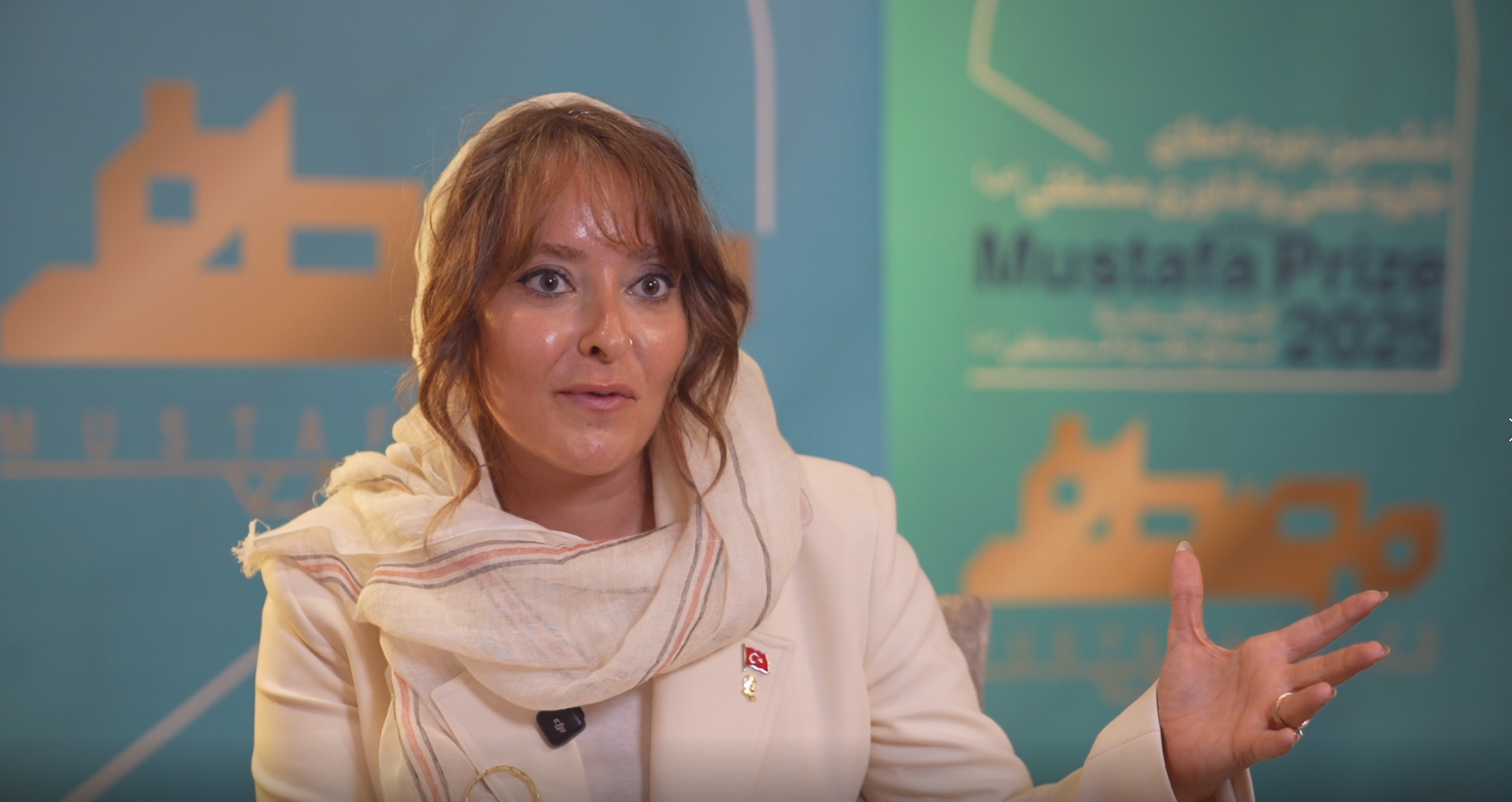
The 2025 Young Scientist Medal winner, Buse Cevatemre Yildirim, has cracked the code of cancer tumors’ drug resistance, paving the path to a definite treatment of cancer.
MSTF Media reports:
Cevatemre Yildirim, the winner of the first Young Scientist Medal, has gained significant insights based on her research on cancer cells’ drug resistance. Her findings help to tackle the problem which is considered the biggest issue in treating cancer.
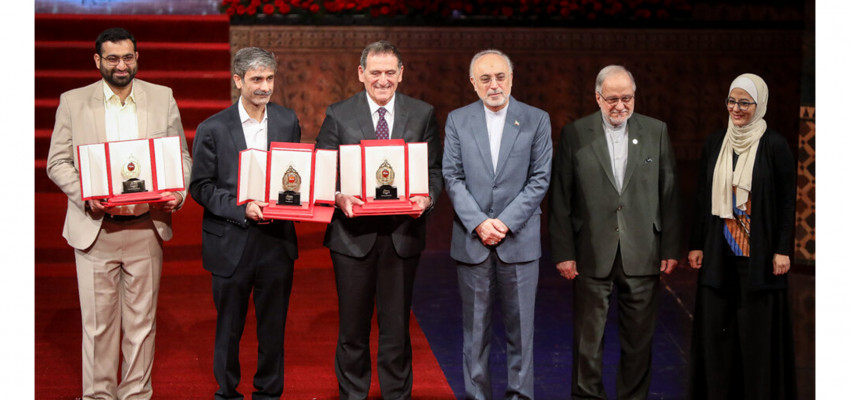
The first Young Scientist Medal award ceremony, held during the 6th Mustafa(pbuh) Prize week last September, honored three promising young scientists from Islamic countries. The Medal established owing to the endowments of Professor Ugur Sahin and Professor Omid Farokhzad, Mustafa(pbuh) Prize laureates in 2019 and 2023 is awarded to scientists under 40 with innovative scientific achievements that have improved the human life.
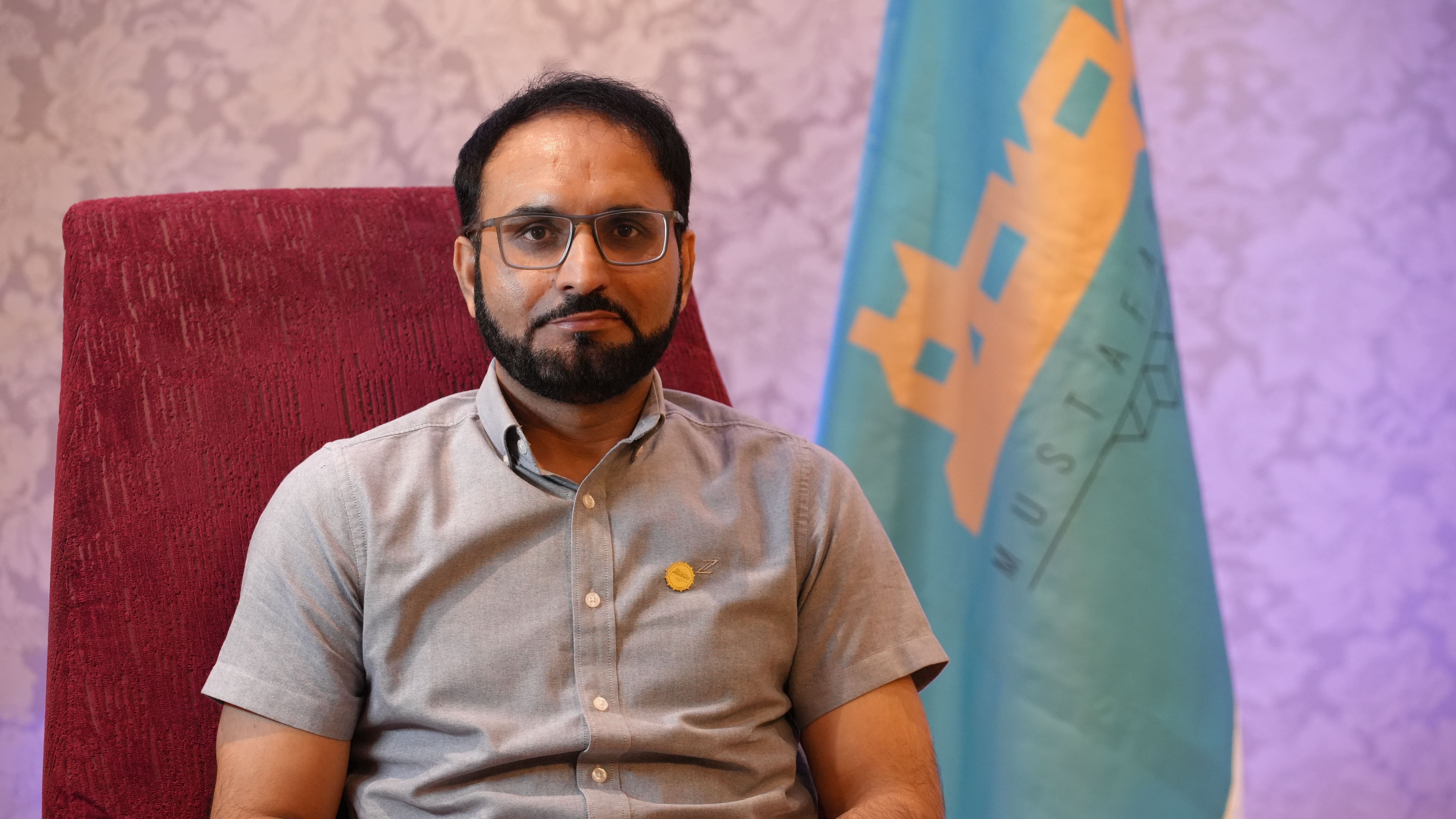
The Turkish Buse Cevatemre was one of the three young scientists who was awarded the Medal last September at the Iran Academy of Sciences. She was recognized for her research on identifying cancer cells’ adaptation and resistance to chemotherapy treatments through epigenetic modifications and micro-environmental interactions.
In the following, read the first part of our interview conducted during her stay in Iran for receiving the award:
You have won several prizes for working on lung cancer, drug resistance, and prostate cancer. One of them is UNESCO L’Oréal for Women in Science Award. Please introduce yourself and tell us the key to your success.
I am Buse Cevatemre Yildirim. I graduated in Biology. During my childhood, I was always collecting insects, carrying them to my family to show them, and listening to the sounds of insects. At that time, I believed that I was supposed to become a biologist.
After obtaining my BSc, I fell in love with molecular biology, and I did my higher education in this field. I think the most important part of my career was my postdoctoral research in Koç University in Istanbul where I worked with an incredible team of brilliant scientists. I have been working there for the past seven years.
During these seven years, my research journey was very beneficial for me, and I found a myriad of opportunities to challenge myself. My PhD thesis was on drug resistance in lung cancer cells. I have also carried out research on drug resistance in general, because it happens that tumors sometimes resist treatment. The research questions we have been investigating over the years are: Why do these cancer cells resist? What mechanisms do they use? How can we overcome this? And how can we target them to make them respond again?
In my seven-year research journey I have received several awards, such as a UNESCO for Women in Science award, the Outstanding Young Researcher Awards from the Turkish Academy of Sciences. I also received two Cancer Science Awards, and my latest award, which I am very proud of, is the Young Scientist Medal.
Can you please explain your research in simple language?
There are several ways to treat cancer. Most patients respond very well to the conventional treatments for cancer—surgery, chemotherapy, and radiotherapy. However, some patients initially resist these drugs, or over time they develop the resistance and stop responding. The medicines just stop working, and this is the most challenging part of cancer treatment. It is a wonder that this happens and that it cannot be predicted.
This is what I believe will be my future focus: predicting resistance in patients. This is really challenging because cancer is really adaptive and mutable. Whatever manipulation you use, they eventually respond. They can move to a dormant state, they just ‘sleep’ over time, and then suddenly they ‘wake up’ again.
So, one would think the patient is okay but the disease returns.
That’s right.
Can you talk about the method(s) that you use and how they help you achieve good results?
The good thing is, when you’re studying this disease, you don’t have to always work on people or patients, because you cannot do that.
At the beginning, it is not allowed.
Yes. And every patient has a different condition. Initially, you have to work with cell models or animal models. So first, we mimicked the patient by adapting prostate cancer cell lines and making them resistant to chemotherapeutics. After that, we wanted to reveal their vulnerabilities. To do that, we performed epigenetic drug screens environmental factors that affect DNA do not change its sequencing but can affect the gene. We wanted to know what happens in those cells and what the epigenetic mechanism is so that we could target them.
Establishing these cancer cells took around a year. We just obtained the library and it consists of 150 drugs and we incubate these drugs with these resistance cells and after three days, we looked at their cell viabilities and whether they are dying or not. After that, some drugs popped up. They also clustered. So, one was a protein group that reads epigenetic marks on chromatin (a complicated substance, consisting of DNA and special proteins called Histone, sitting in a compacted manner in the nucleus), so we wanted to focus on that group because many drugs accumulated in that class.
So you had many team members, and after carrying out intensive research you figured out some mechanisms that helped the research move forward.
I had a team of graduate students and we had a principal investigator. I was, as I said before, a postdoctoral researcher in that laboratory. In this project, we worked closely with another sister lab. So we were always asking: “Do you have that equipment? Do you have that inhibitor?” So, overall, I think, 10 to 20 people worked on that project.
Did you find it enjoyable?
It’s definitely enjoyable. If everyone puts themselves behind the science, not just thinking about themselves, it is very enjoyable.
Would you still find it enjoyable after working on something for a year?
I would, because I think research evolves every five years, and new ideas should be thought of. But this project took around four to five years. In 2020, I received the L’Oréal award for that project, and four years later, we published a paper. So we could say it took around five years.
Five years for one project. Are you still fond of this project?
That project also seeded another project. So it is not like you’re only working on one project; you don’t have to stick with it. At some point, you find interesting things, ask questions, apply for different grants, and if they like your idea, then you start another project.
Do you currently have some international projects going on?
No, not now. But I am currently trying to apply for a European project.
How can cancer cells be tracked using epigenetic modifications?
Epigenetics are very transient events that can lose the chromatin or compact it in the opposite way. So, if you hit the tumor with epigenetic drugs, that would dramatically change the chromatin and you would get a strong response from the patient eventually. However, we are aware that epigenetic drugs are very toxic and that’s why they have such a huge effect on the cells.
Do you believe cancer is different from patient to patient?
Precisely. I think this is nature of the disease. It’s like a finger print. Every tumor is very different because of the genetic background. Therefore, targeting all tumors in one manner is not realistic. So, we have to check the patient’s genetic background, different characteristic of the type of cancer and what is happening inside the tumors. Personalized medicine is a fresh research topic.
Do you intend to work on it?
I do. I would like to move to personalized medicine so I could see which patient is going to respond to which kind of therapy. So, maybe analyzing or trying to find the predictive markers or prognostic markers would be my future research area.
As you mentioned, some patients suddenly stop responding to drugs. Why is that so?
There are a lot of ways to establish drug resistant. The main reason is that antiproteins that cause cell death are produced by the cell and cells just don’t want to die. It’s just one way. The other way is this: there are transporters on the cell membranes so if you want your drug to be efficient in these cells, they should enter the cells. But sometimes cells can upregulate these transporters in cell membranes so that when they have the drug inside the cells, they tend to just pump them out. So, that drug won’t be able to act inside those cells.
The other mechanism would be interactions with microenvironments, and there could also be genomic amplification which we saw in one of our cell lines, but those cells can also respond again with the epigenetic inhibition. So there are several mechanisms actually.