Stimulus-Responsive Nanoparticles Promise a New Era of Automated Drug Delivery

Jackie Yi-Ru Ying, a pioneer of nanotechnology in medicine, announced the development of polymer nanoparticles that can detect changes in the body and release drugs at the right time and place.
MSTF Media reports:
When it comes to future medical technologies, one mostly thinks of robotic surgeons, artificial intelligence, or advanced imaging equipment. Still, one of the most transformative technologies that could revolutionize disease treatment in the upcoming decades is being developed on a much smaller scale than commonly thought.
This technology is based on
stimuli-responsive polymer nanostructures, extremely small particles that are able to continuously monitor the body's condition and release the drug only at the right time and in the right place.
Jackie Ying, a prominent figure in the field of bioengineering and nanotechnology, the founding executive director of the Institute of Bioengineering and Nanotechnology (IBN), and winner of the 2015 Mustafapbuh Prize, in an interview with the MSTF, explained the latest achievements in and prospects of this technology; a technology that can transform the concept of drug delivery from a scheduled and general process to an smart, personalized, and automated process.
It began with a simple question
According to Ying, the main idea of smart drug delivery was based on a fundamental question: Can the drug delivered to the body be released only when needed, in the desired location, and in the exact amount needed?
This simple question paved the way for the formation of one of the most important research areas in modern medicine. Conventional treatment methods require the patient to take medication at specific times, without the body necessarily needing that medication at that moment. This can lead to overuse of the medication, reduced effectiveness of the treatment, or side effects.
In contrast, stimuli-responsive drug delivery systems are designed to take into account the body's condition and only activate when needed. This feature makes them a powerful tool for the next generation of medical treatments.
Nanoparticles as tiny nurses
To better understand this technology, let us consider diabetes. Millions of diabetic patients around the world have to constantly monitor their blood sugar levels and inject insulin when needed. However, sudden fluctuations in blood sugar are not always predictable.
Ying explains that new systems involve nanoparticles placed in the body that continuously monitor blood glucose levels. Whenever blood sugar levels increase, these particles are automatically activated and release the insulin stored within them. After blood sugar returns to normal, the release process stops. In fact, these nanoparticles act like an intelligent and tireless nurse that monitors the patient's condition around the clock and takes action at the right moment.
How do polymer nanostructures work?
Polymer nanostructures are made of polymer molecular chains that are engineered at the nanoscale. Although polymers are found in many everyday products such as plastics, adhesives, and even biological molecules such as DNA, they have completely different capabilities when designed and controlled at the nanometer scale.
These structures can store and transport the drug inside them like very small capsules. Their main difference from conventional drug carriers is that they release their contents only in response to certain stimuli.
This stimulus can be an increase in glucose concentration, a change in temperature, a change in tissue acidity, the presence of specific enzymes, or even external factors such as light, magnetic fields, and ultrasound waves.
Stimulus-responsive technology: key to targeted therapy
One of the key notions in this field is ‘stimulus response.’ In these systems, nanoparticles are designed to be sensitive to environmental changes. For example, if the environment around the nanoparticle becomes more acidic or glucose levels increase, its physical or chemical structure changes.
This change, which can take the form of swelling, opening of the polymer network, or breaking of chemical bonds, ultimately leads to the release of the drug.
“This process can be likened to a lock that can only be opened with its own key,” Ying explains. “In fact, the body issues the necessary signal and the nanoparticle releases the drug in response.”
Smart diabetes treatment, an important application
Ying believes one of the most promising applications of this technology to be the treatment of diabetes.
In diabetes, careful control of blood sugar levels is of vital importance, and the slightest error in adjusting the insulin dose can have serious consequences for the patient.
The new generation of drug delivery systems uses nanoparticles that are sensitive to the glucose molecule. These nanoparticles are usually made from biocompatible polymers such as polyethylene glycol and chitosan and are combined with specific functional groups such as phenylboronic acid.
These chemical groups have the ability to recognize glucose molecules. When glucose concentration increases, the interaction between glucose and these chemical groups causes the nanoparticle structure to change, resulting in the release of insulin.
As glucose levels decrease, the nanoparticle structure returns to its original state and drug release stops. This cycle can be repeated many times, creating a kind of self-regulating healing system.
Designing self-regulating nanoparticles
In this technology, insulin molecules are first loaded into the nanoparticle. The polymer coating around it is then designed to open only under specific conditions.
When blood sugar levels rise, glucose molecules react with the boronic acid groups in the nanoparticle structure. This reaction causes a change in molecular arrangement, increased permeability or swelling of the structure, and ultimately insulin is released in a controlled manner.
This process not only increases the accuracy of treatment, but also significantly reduces the need for repeated injections and improves the quality of life of patients.
Where does this technology currently stand?
Although smart drug delivery based on polymer nanoparticles has not yet been widely introduced into everyday treatments, significant progress has been made in this field in recent years.
According to Ying, most of the research so far has been conducted in animal models, with initial results proving promising. Researchers at leading scientific centers around the world, including MIT, Stanford University, and Singapore Research Institutes, are developing new generations of drug nanocarriers that respond to different types of biological stimuli.
Animal studies have shown that these systems can effectively control blood sugar levels and, in some cases, function close to an artificial pancreas system. However, the path to commercialization and widespread use still requires clinical trials, long-term safety studies, and regulatory approvals.
What are the advantages of smart drug delivery over traditional methods?
Experts believe that the most important advantage of this technology is increased precision in the time and place of drug release. In traditional methods, the medicine is taken according to a specific schedule, but in the new method, the body determines the time of consumption.
This feature lowers overall drug consumption, increases treatment effectiveness, and reduces side effects. The drug is also delivered directly to the target tissue, preventing damage to other tissues in the body. As a result, treatment will not only be more effective but also safer.
Beyond diabetes: applications in cancer and neurological diseases
Ying emphasizes that the applications of this technology are not limited to diabetes. One of the most important areas in which nanoparticles can be deployed is stimuli-responsive cancer treatment.
In the case of many cancer treatments, chemotherapy drugs damage healthy cells in addition to cancer cells, but smart nanoparticles can deliver the drug directly to the tumor and release it only in the specific environment of cancer cells. Additionally, in inflammatory diseases, these systems can be used to identify the site of inflammation and target drug release.
Another important application is the treatment of brain and nervous diseases. Many drugs are unable to cross the blood-brain barrier, but advanced nanocarriers can pass this barrier and deliver the drug to specific parts of the brain.
According to Ying, despite all the benefits, the development of this technology still comes with challenges. The most important challenge is ensuring the long-term safety of nanoparticles in the human body. Although many of these materials are biodegradable and biocompatible, researchers must ensure that their potential accumulation in tissues or their degradation products does not cause any unwanted side effects. Mass production, cost reduction, and standardization of manufacturing processes are among other obstacles to the commercialization of this technology.
A future where the body manages its own healing
Experts believe that stimuli-responsive polymer nanostructures could be one of the main pillars of future medicine; a medicine in which treatments are performed automatically, intelligently, and tailored to each individual's condition.
In such a future, patients will no longer need to remember when to take their medication or worry about forgetting doses. Smart nanosystems will detect changes in the body and take action at exactly the right time.
Stimuli-responsive nanoparticle technology is not just a new tool for drug delivery; it is also an important step towards realizing personalized and smart medicine. A path that could revolutionize the treatment of chronic diseases, cancer, neurological disorders, and many other complex illnesses.
If current trends continue, the future of medicine will lie not in traditional pills and injections but in tiny particles that silently monitor the body's condition, understand its needs, and initiate treatment at the right moment.


Mustafa Foundation launches blockchain platform for global scientific support

Iran Calls for Global Network of Science Patrons Alongside Scientists’ Network

STEP-AUT Office to Connect Scientists and Universities Across the Islamic World

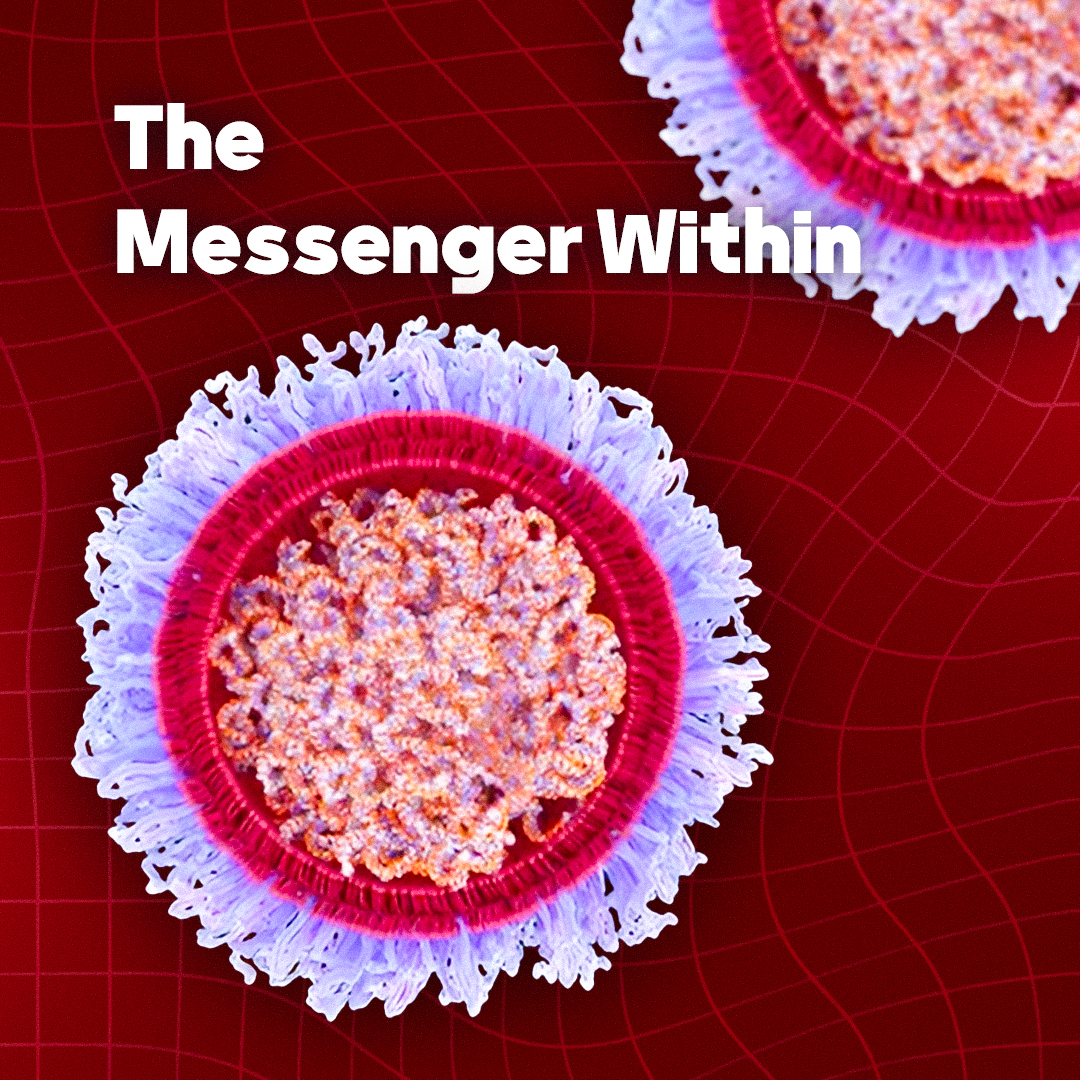
‘The Messenger Within’: How mRNA Became a Pandemic Game-Changer